

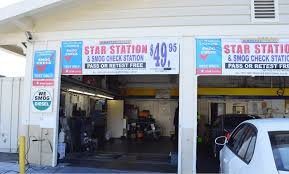
I once found a “steal” of a deal on a classic 1990s SUV in Chula Vista. The seller was a nice guy who claimed the car just needed a “quick tune-up” to pass smog. I handed over the cash, drove it home, and two days later, I found out the catalytic converter was gutted. In California, that’s not just a bad deal—it’s a legal nightmare.
Most people think a smog check is just a boring biennial chore for registration. But when you are buying or selling a vehicle in San Diego, the rules change completely. If you don’t know the specifics of the “Change of Ownership” smog requirements, you could end up stuck with a lawn ornament that you can’t legally drive or a lawsuit from a frustrated buyer.
The Seller’s Legal Burden: It’s on You
Here is the reality that many private sellers try to ignore: In California, the seller is legally responsible for providing a passing smog certificate at the time of sale. I see “Sold As-Is” written on Craigslist and Facebook Marketplace ads all the time. In the eyes of the California DMV, that “As-Is” clause does not exempt you from the smog requirement.
If you sell a car that fails, the buyer can actually take you to small claims court to recover the cost of repairs needed to make it pass. Even if they signed a paper saying they’d handle the smog, the law is usually on the buyer’s side. I always tell my friends to get the test done before they even list the car for sale. A passing certificate is valid for 90 days, giving you a three-month window to find a buyer.
Change of Ownership Requirements
| Scenario | Smog Required? | Who Pays? |
| Private Sale (Car > 4 years old) | Yes | Legally the Seller |
| Transfer between Parents/Children | No | N/A (Exempt) |
| Transfer between Grandparents/Grandkids | No | N/A (Exempt) |
| Transfer between Siblings | Yes | Legally the Seller |
| Selling to a Dealership | No | Dealer handles it |
I’ve had people ask me about “gifting” a car to a friend to avoid the smog. Don’t do it. The family exemption is very narrow. If you aren’t related as a parent, child, grandparent, or spouse, the DMV wants that smog certificate before they issue a new title.
New Car Owners: The 8-Year Grace Period
If you are lucky enough to drive a newer car in San Diego, you might have forgotten what a smog station looks like. California gives a pass to gasoline-powered vehicles that are less than eight model years old for biennial renewals. Instead of a test, you pay a “Smog Abatement Fee” with your registration.
However, there is a catch. If you sell that car and it is more than four model years old, it still needs a smog check for the new owner. I’ve seen people get confused by this “4-year vs 8-year” rule.
Understanding the Age Limits (As of 2026)
| Vehicle Age | Renewal Requirement | Sale Requirement |
| 0-4 Years Old | Abatement Fee Only | No Smog Needed |
| 5-8 Years Old | Abatement Fee Only | Smog Check Required |
| 8+ Years Old | Biennial Smog Test | Smog Check Required |
If you’re buying a 2021 model in 2026, you’re in that “gray zone.” You won’t need a smog for your yearly tags, but since you are buying it, the seller must provide a certificate because the car is over four years old. Always double-check the smog check location history on the BAR website to see if the car has a history of passing or failing before you buy.
The “Visual Inspection” Failure: The Silent Killer
I’ve seen cars that run perfectly—I mean, they purr like a kitten and have zero tailpipe emissions—fail a smog check in minutes. Why? The visual inspection. California technicians are trained to look for anything that isn’t “stock” or “CARB-approved.”
In San Diego, we have a big car culture. People love to add cold air intakes, headers, or aftermarket exhaust systems. If that part doesn’t have an Executive Order (EO) number stamped on it, it’s an automatic fail. I once saw a guy fail because a tiny vacuum hose was routed incorrectly, even though the car was running cleaner than a new hybrid.
Common Visual Inspection Pitfalls
| Part | Why it Fails | The Fix |
| Air Intake | No CARB EO sticker. | Reinstall factory box or buy CARB-legal kit. |
| Catalytic Converter | Wrong grade or “49-state” legal. | Must be California-approved (more expensive). |
| Timing | Adjusted outside of factory specs. | Set back to “Base Timing” before the test. |
| Vacuum Hoses | Cracked, plugged, or missing. | Replace with standard rubber vacuum line. |
If you’ve modified your car, look for a smog check discount at a shop that specializes in performance vehicles. They aren’t going to “cheat” for you, but they understand aftermarket parts better and can tell you exactly what needs a sticker and what doesn’t.
Buying a “Smog-Ready” Car: A Checklist for San Diego Buyers
When you are meeting a seller in a parking lot in Mission Valley or Mira Mesa, you need to be a bit of a detective. Most people are honest, but some are just trying to offload a headache.
I always bring a cheap $20 OBD-II scanner with me. You can buy these at any auto parts store. I plug it into the car and check the “Monitors.” If the seller says they just “cleared a code” or “unplugged the battery to save it,” they might be hiding a persistent check engine light that will fail the smog test as soon as you drive 50 miles.
What to Ask the Seller
- “Do you have a passing smog certificate from the last 90 days?” If no, tell them you’ll buy it once they get one.
- “Is the Check Engine light on?” Look at the dash when you turn the key. The light should come on and then go off. If it never comes on, someone might have pulled the bulb.
- “Are there any aftermarket engine parts?” Ask specifically about the intake and the catalytic converter.
- “When was the battery last replaced?” If it was yesterday, the monitors won’t be ready.
I’ve walked away from three different “good deals” because the monitors were incomplete. It usually meant the seller had a recurring P0420 code (Catalytic Converter efficiency) and was trying to sell the car before the light popped back on.
What Happens if You Can’t Pass?
Sometimes, despite your best efforts, the car just won’t pass. Maybe it’s an old work truck or a high-mileage commuter. In San Diego, if the repair costs exceed the value of the car, you have a few specialized options.
You can look into the “Vehicle Retirement” program. The state will actually pay you $1,000 to $1,500 to scrap the car at a state-approved dismantler. I’ve used this for an old family car that had a blown head gasket. It was worth $500 as a trade-in, but the state gave us $1,500 because it failed smog.
Comparison: Repair vs. Retirement
| Option | Best For | Benefit |
| Repair via CAP | Cars you want to keep. | Up to $1,200 in state-funded repairs. |
| Vehicle Retirement | Total “junkers” or major failures. | Fast cash ($1,000 – $1,500) and no repair bills. |
| Selling as “Parts” | Rare or classic cars. | Potentially more money, but you can’t sell as a “car.” |
If you do choose to fix it, remember that a smog check is a specialized field. Don’t just take it to a general mechanic; look for a “Smog Repair” specialist. They have the diagnostic gas analyzers that a regular shop might not have.
Final Thoughts on San Diego Sales
Living in San Diego means we deal with some of the highest fuel prices and strictest emissions laws in the country. It’s the price we pay for the sunshine and the ocean breeze. When you’re dealing with a change of ownership, don’t take shortcuts.
I’ve seen people lose friendships over a $500 car sale that turned into a $2,000 repair bill. Whether you are buying or selling, demand the smog certificate. It is the only way to ensure the transaction is legal, ethical, and won’t end in a headache at the DMV office on Normal Street. Get the test done, use a coupon to save a few bucks, and keep your paperwork organized. It makes the whole process of owning a car in Southern California much more manageable.